
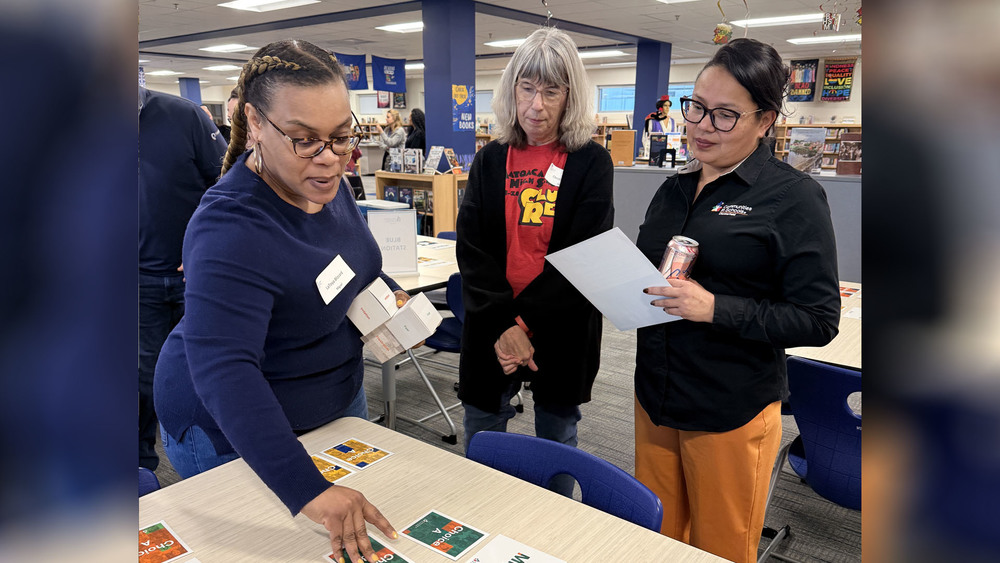
More than 40% of Chesterfield students are economically disadvantaged. That’s 26,213 children facing barriers to success: Not much to eat. No clean clothes. No quiet space or time to do homework. Limited opportunities. Communities In Schools of Chesterfield recently invited adults to experience a day in the life of a child living in poverty.
About 20 said yes to the “I See You” simulation, including teachers, school staff members, local leaders and community partners who wanted to understand barriers facing young people and how Communities In Schools works to overcome those barriers.
The simulation was based on real students in another state. Here’s how it worked:
Participants split into small groups, then got to know a child facing big challenges. First, each group read a short biography of their student, then rotated through nine stations to read cards detailing parts of the student’s day. Each scenario offered two options about how the student might respond to a problem. The group chose a response, then read what happened based on that choice. The final step at each station was to decide what the student might be feeling in that moment, then select a “barrier box” representing that emotion: stress, insecurity, distraction, shame, sadness, anxiety, overwhelmed, frustration, fear, embarrassment, defeat, forgotten or desperation. One group member was tasked with carrying all of the boxes — symbolizing the barriers and emotions that students carry with them in and out of school.
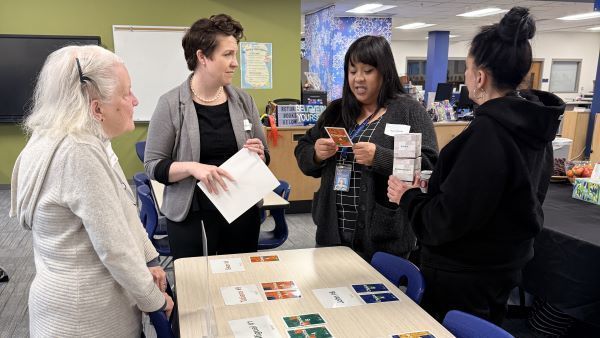
One simulation group got to know Michael, a sixth grader living with his parents and five siblings in a crowded, noisy house. Both parents have jobs, but money is tight and they argue about rent and other bills. Michael helps take care of his younger siblings because his older brothers are often away from home.
Michael’s day starts with getting his siblings ready for school and making their breakfast. But he has no time to eat because his school bus arrives. He has no clean clothes because the laundry has not been done. Rather than wear his younger brother’s clothes, which are clean but too small, Michael chooses to wear his least-dirty clothes. Michael believes no one will sit next to him on the bus “because they never do” and hopes he doesn’t smell bad. For this scenario, Michael’s group chose fear to describe how he is feeling.
Hunger makes it hard for Michael to focus in school. He frequently asks to go to the bathroom so that he can drink water to fill his stomach, but leaving class annoys his teachers. Michael considers hiding in the bathroom until lunch but instead decides to stay in class: “It’s only one more hour to lunch. I can make it.” In class, the teacher calls on Michael but he doesn’t know the answers to the questions, which makes him feel bad because he wants to do well. For this scenario, Michael’s group chose anxiety to describe how he is feeling.
Throughout the day, Michael encounters tough situations, leading the simulation group to choose these barrier boxes:
Frustration, when students laugh after his worn-out shoes make him trip.
Overwhelmed, when — instead of studying for a quiz — he sits with friends at lunch because responsibility for his younger siblings means Michael can’t hang out after school with friends. “Why is it so much harder for me than everyone else?” he wonders.
Shame, when a teacher kindly asks about his worn-out shoes but Michael is afraid other students will overhear.
Sadness, when Michael decides not to ask his parents for $5 for a field trip that he really wants to go on because he doesn’t want to cause another argument about money. “I can’t wait until I am old enough to make money and pay for my own things,” he thinks.
Distraction, when Michael tries to do his homework but has no time to himself or any quiet space where he can concentrate.
Insecurity, when he cooks dinner for his siblings using a box of macaroni and cheese despite the lack of butter and milk. There’s not enough to go around, so Michael makes himself a tuna sandwich.
Stress, when Michael puts his siblings to bed and helps his mom around the house before trying to do some homework and hoping he can get to bed by midnight.
The “I See You” simulation powerfully demonstrated the invisible burdens that children carry with them. Participants felt the weight of problems students face when their families have limited resources. Participants also saw how resilient students can be as they continue to push through difficulties and solve problems as best they can.
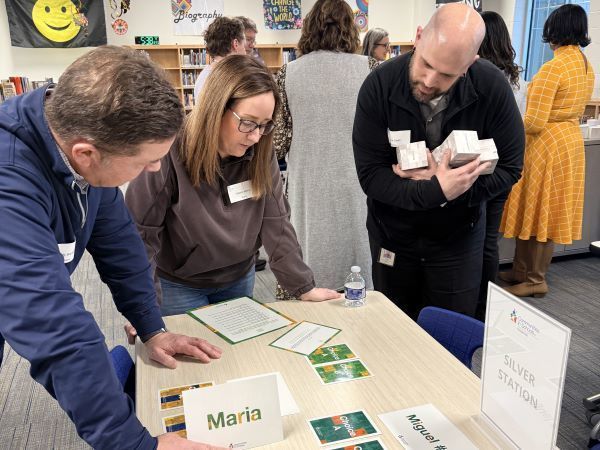 Executive Director Ashley Hall pointed out that the simulation shows how Communities In Schools makes a difference by providing wraparound services for students and families. Chesterfield’s CIS site coordinators help students like Michael every day, easing their burdens and providing support so they graduate from high school with a plan for their future. In 16 schools across Chesterfield County, CIS supports nearly 15,000 students and their families with basic needs (food, housing, health care), academic support and community.
CIS succeeds by building relationships: with students, with families, with teachers and school staff members, with community partners. Here are ways to connect with Communities In Schools of Chesterfield:
Participate in All Site Volunteer Month
Sign up for the monthly newsletter
Make a donation
Visit the CIS website